Alaska Expands Civil Legal Aid Funding With New State Law
Thousands of low-income Alaskans struggling with civil legal issues may soon gain better access to free legal support after a new state law quietly took effect without Gov. Mike Dunleavy’s signature.
The legislation, introduced by Juneau Democratic Rep. Sara Hannan, received strong bipartisan backing earlier this month. The bill passed with support from 27 of 40 House members and 17 of 20 senators, signaling broad agreement on the growing demand for civil legal assistance across Alaska.
Under the updated law, up to one-quarter of annual court filing fees can now be directed into the state’s existing civil legal services fund. The change is expected to provide nearly $400,000 in additional funding next year for legal aid programs serving residents who cannot afford attorneys.
That increase could open the door for hundreds of Alaskans to receive free legal help in civil matters tied to domestic violence protective orders, child support disputes, and applications for public assistance programs.
Growing Demand for Legal Assistance
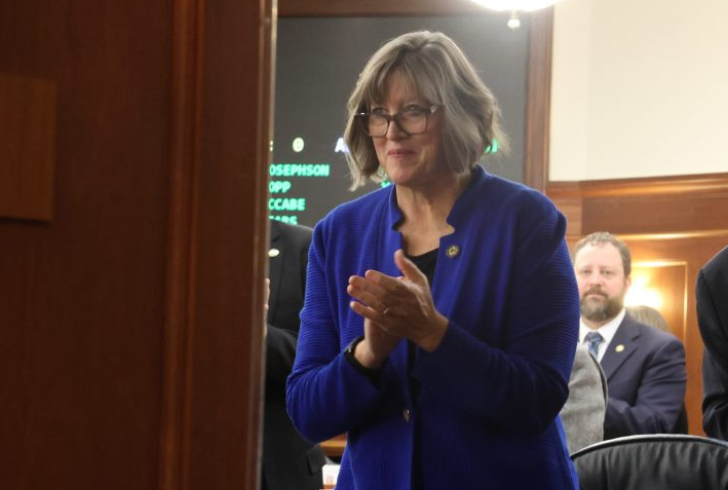
alaskahousemajority.com | Rep. Sara Hannan’s civil legal aid bill passed with strong bipartisan support from Alaska’s House and Senate.
Alaska first created the civil legal services fund in 2007. Lawmakers later expanded it in 2018 by allowing up to 10% of annual court filing fees to support the fund. Even with that adjustment, advocates said demand for legal aid continued to rise faster than available funding.
A similar proposal cleared the Senate during the 2024 legislative session but failed to move through the House before the session ended.
Recent yearly appropriations from the fund ranged between $280,000 and $360,000. With the new law in place, the allowable annual appropriation will rise to roughly $766,000, according to the Department of Commerce, Community and Economic Development.
Alaska Legal Services Faces Heavy Caseloads
The funding supports Alaska Legal Services Corporation, the state’s only nonprofit focused entirely on civil legal aid for low-income residents.
The organization reported turning away nearly half of the Alaskans seeking help this year because resources were stretched too thin. In 2025 alone, the group handled 5,455 cases involving almost 15,000 residents. By comparison, it managed 2,880 cases affecting just over 6,000 people in 2016.
The nonprofit operates with an annual budget of about $10 million. Only a small share comes directly from the state, while additional support arrives through federal funding, tribal partnerships, and private donations. Alongside money from the civil legal services fund, the organization has also received an annual state grant of $400,000 since 2022, reduced from $450,000 in earlier years.
Executive Director Maggie Humm estimated that every additional $100,000 in funding allows the organization to assist roughly 182 more Alaskans.
The law marks a notable shift in Alaska’s approach to civil legal aid. As legal costs continue to rise, the additional funding is expected to ease pressure on nonprofit legal providers and improve access to legal representation for residents facing serious civil issues without the means to hire an attorney.