How This Entrepreneur Sold $1.4 Million in Products in Just One Hour
A product launch can take months to gain attention, yet Alvaro Gellings saw a fashion brand generate about $1.4 million in sales during its first hour. The Spanish-born serial entrepreneur reached that result by changing how he viewed creators.
Instead of treating influencers as another advertising channel, he began using their audiences, stories, and personal brands as the starting point for building businesses.
Gellings recently discussed that approach at the OOAK Mastermind conference in Castelfalfi, Italy. His experience spans gaming, fashion, sportswear, paid advertising, creator partnerships, and large-scale content campaigns.
His work offers a clear look at how creator-led companies can move from quick attention to long-term brand value.
A Shift From Paid Ads
Before entering the creator economy, Gellings built and scaled a gaming company through paid advertising. His approach was simple: buy attention and sell the product.
“That’s all I knew,” he said. “Buying reach and selling the product.”
In 2021, Gellings sold the company and moved into an apartment in Hamburg, Germany. A Twitch creator happened to live in the same building. At the creator’s birthday party, Gellings met a popular streamer who offered a different view of audience growth.
“You have to buy your reach,” the streamer told him, according to Gellings. “I have the reach.”
That conversation changed how Gellings looked at creators. If companies were willing to pay large sums for access to creator audiences, he reasoned, those audiences had real commercial value.
The idea soon became part of his next business.
Ama Studios Proved the Model
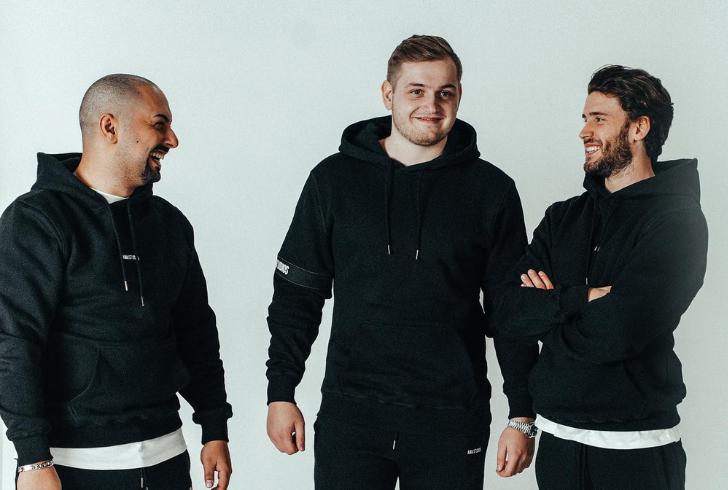
Instagram | alvaro.gellings | Partnering with influencers Trymacs and Amar on Ama Studios taught Gellings the value of creator ownership.
Gellings founded fashion company Ama Studios with German online personalities Trymacs and Amar. The partnership gave him a closer look at what happens when creators participate directly in a brand instead of simply promoting someone else’s product.
The launch came together in about three months in 2021. During the first hour, Gellings says Ama Studios generated €1.2 million, or roughly $1.4 million, in sales.
Sitting at his laptop, he recalled thinking, “Wow, that’s insane.”
The result gave Gellings a stronger belief in creator-led commerce. He saw that creators could do more than deliver impressions. They could help shape the story around a product and give people a reason to pay attention.
That lesson became especially useful in sportswear, where customers rarely feel an urgent need to buy another basic item.
Why Sportswear Needed a Story
Gellings later launched Day One with German creator and endurance athlete Arda Saatçi. He understood the clothing business, but he also recognized a problem with ordinary sportswear marketing.
“Nobody’s looking for the next gym tank to buy,” he said. “Nobody’s in urgent need of the next T-shirt, the next socks, the next shoes. You have to create a story.”
Gellings met Saatçi in 2024 while discussing a possible investment in a sports-teaching app. Saatçi had about 100,000 followers at the time. His audience later grew to about 2.9 million.
Gellings quickly saw potential in the athlete’s personality and camera presence.
“He’s a superstar,” Gellings recalled thinking. “He’s super good in front of the camera, and he’s crazy in terms of sports.”
Within 48 hours, Gellings had prepared a pitch with a presentation deck, samples, models, and a film showing what the proposed brand could become.
The proposal centered on attention rather than a standard influencer deal. Gellings believed creators often value audience growth as much as financial compensation.
“One thing I learned about being in constant contact with creators and influencers and celebrities,” he said, “the one thing that they like more than money is audience and reach and being even more famous.”
The Berlin-to-New York Plan
The Day One concept called for Saatçi to run from Berlin to New York. The team would record the journey, create long-form videos, cut the footage into short clips, and distribute those clips through TikTok, Instagram, YouTube Shorts, and other platforms.
Day One would launch when Saatçi reached New York.
The idea connected the product to a real athletic challenge instead of placing a conventional advertisement between unrelated content. Viewers could follow the event, watch the progress, and encounter the brand through the story itself.
That approach later shaped Day One’s broader marketing strategy.
Cyborg Season Scaled the Attention
Day One developed its major “Cyborg Season” campaigns around Saatçi’s endurance challenges. One of the largest efforts involved a 3,000-kilometer, or 1,864-mile, ultramarathon.
The company built a large content operation around the event. Gellings says about 200 content clippers worked on turning Saatçi’s footage into short-form videos.
The creator network added another layer. Twitch stars and other influencers reacted to the material, creating additional content from the original footage. Independent clipping accounts eventually began spreading the videos without direct involvement from Day One.
“Everything you put his face on was going viral,” Gellings said.
According to Gellings, the campaign generated more than 1.5 billion impressions across German-speaking markets. Saatçi gained more than 800,000 followers in Germany during the campaign. Individual YouTube videos often reached between 400,000 and 600,000 views.
The sales numbers followed the attention. On the day Saatçi arrived, Gellings says Day One generated close to $1 million in revenue. The company then sold its entire inventory over the following days.
Gellings had invested €500,000, or about $582,517, of his own money to fund marketing and operations.
Across three “Cyborg Season” campaigns, he estimates that Day One generated around 3.5 billion impressions. A later livestream reportedly attracted more than two million concurrent viewers on YouTube and 1.2 million on Twitch.
One YouTube livestream reached 50 million views, while TikTok live activity generated three billion likes.
The Risk of One Creator
Huge audience numbers created another problem. If one person drives most of a company’s attention, that person can also become its biggest business risk.
“You have a huge human risk,” Gellings said. “Nobody’s going to invest in you. What if he doesn’t want to do it anymore?”
His solution involved gradually reducing the creator’s share of the brand’s overall relevance. The goal was to grow total revenue faster than the creator’s individual commercial value.
That approach allowed Day One to use Saatçi as the initial growth engine while building other reasons for consumers to recognize the brand.
Making Day One Stand Alone
Gellings described the progression in three stages: “founder is the brand,” then “the founder curates the brand,” and eventually “the brand stands alone.”
Day One used premium product seeding to move toward the second stage. The company sent limited-edition packages to athletes, footballers, musicians, streamers, and other influential figures.
One package contained a fragment of a shoe Saatçi had worn during an ultramarathon. The piece appeared behind glass with a numbered metal plate. Recipients also received a personalized video and letter.
The packages aimed to make recipients feel connected to the story rather than simply turn them into product-placement channels.
“They felt very honored,” Gellings said.
Recipients then shared the packages with their own audiences. That extended Day One’s visibility beyond Saatçi and introduced the brand to athletes and cultural figures who had no direct connection to the original endurance campaign.
Later packages became collector’s items, according to Gellings.
99 Laps Built Brand Relevance
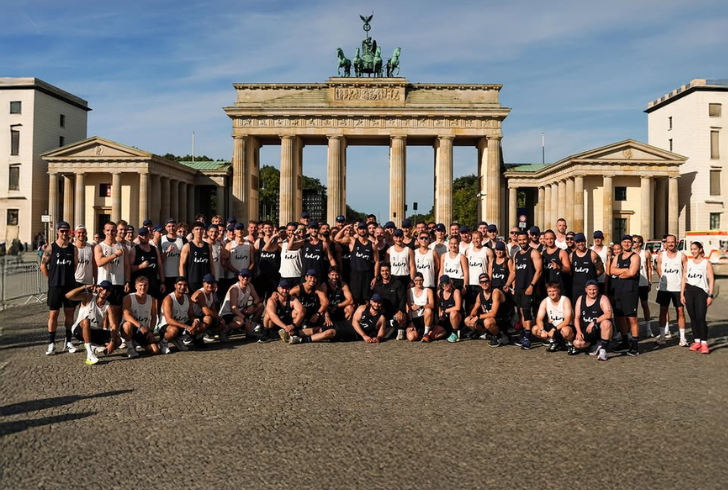
Instagram | day1 | Day One launched “99 Laps,” a 100-runner elimination race, generating €400,000 in revenue against €450,000 in costs.
Day One eventually moved toward creating events that could generate attention without relying entirely on Saatçi.
One example was 99 Laps, an endurance competition featuring 100 elite athletes. Held in late July, the event required competitors to complete 99 laps of 1.2 kilometers, or 0.75 miles, each. After every lap, the slowest runner was eliminated.
The event reportedly generated about €400,000, or $467,152, in sponsorship revenue while costing around €450,000, or $525,546, to produce.
Gellings said the short-term loss was intentional.
“We didn’t want to make money,” he said. “We wanted to create relevance for our brands.”
The competition reportedly drew 30,000 concurrent live viewers and generated an estimated 100 million to 200 million impressions. Athletes wore Day One products, while sponsors included Garmin and Blackroll.
That association helped place Day One beside established names in endurance sports.
“Whenever they thought Day One, I was like, Oh, Day One, Garmin,” Gellings said. “Day One is a premium brand.”
The event also supported the launch of Day One’s Ultra line, a high-performance collection aimed at racing. Instead of relying on a traditional product announcement, the company placed the products directly into the competition, allowing viewers to see elite runners wearing them.
The Creator Is Only the Starting Point
Gellings’ approach points to a broader idea in creator-led commerce. A large following can generate an early surge, but long-term brand value requires more than one personality.
Creators can bring initial attention. From there, companies can build original content, communities, events, partnerships, product experiences, and broader cultural relevance.
“The creator is the first step of the rocket,” Gellings said. “It helps you reach a certain height super, super fast.”
The harder task comes afterward: creating a company that people recognize without needing the creator to appear in every campaign.
Gellings also considers the work far from finished. Despite having spent nine years as an entrepreneur, he described himself as being “at the very beginning” of his entrepreneurial journey.
Alvaro Gellings’ business strategy shows how creator marketing can move beyond sponsored posts and short-term advertising. Ama Studios demonstrated the sales potential of creator-led launches, while Day One pushed the model into endurance sports, large-scale content, product seeding, and live events.
The strongest part of the strategy is not simply the size of the audience. It is the attempt to turn attention into an independent brand. For Day One, that means using Arda Saatçi’s reach as an early growth engine while building products, events, partnerships, and recognition that can eventually stand on their own.