How Hermès Became the World’s Most Valuable Luxury Brand
Inside the serene headquarters of Hermès in Paris, precision meets artistry under the calm leadership of Nadège Vanhée, the artistic director of women’s ready-to-wear.
Known for her quiet discipline, Vanhée compares her role to that of an air-traffic controller—constantly balancing creativity and control, beauty and practicality.
Her philosophy captures what has defined Hermès for nearly two centuries: a focus on mastery, meaning, and meticulous craftsmanship.
The Hermès Philosophy
Thierry Hermès founded his namesake house in 1837, setting a course defined by craftsmanship rather than scale. Unlike luxury giants such as LVMH or Kering, Hermès has stayed true to its roots as a family-run business built on tradition and independence. Pierre-Alexis Dumas, the sixth-generation artistic director, now oversees 16 métiers—from leather and silk to jewelry and home design—all connected by the same mastery of technique.
“You have to change all the time to remain the same,” Dumas often remarks, a phrase that perfectly captures Hermès’s ethos.
Every Birkin and Kelly bag, hand-stitched start to finish by a single artisan, represents more than status—it’s a statement of resistance to automation. Even as fashion leans further into technology, Hermès continues to thrive through something deeply human: the touch of the maker.
Nadège Vanhée and the Return of Haute Couture
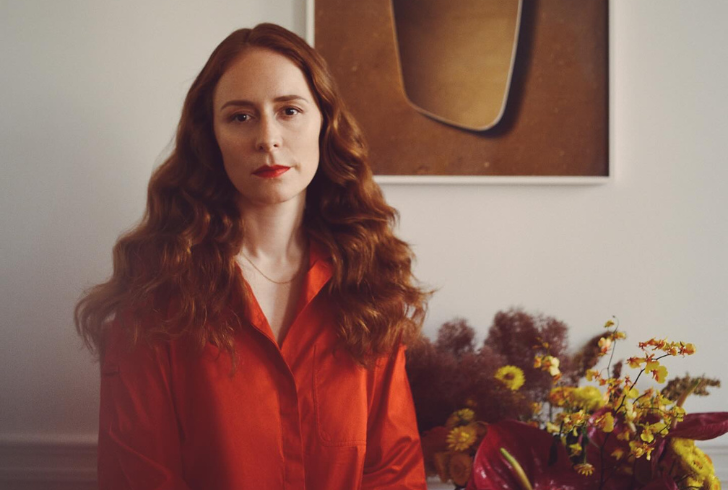
Instagram | matthieusalvaing | Vanhée is set to revive Hermès’s long-dormant haute couture collection.
After a decade of designing ready-to-wear collections, Vanhée is preparing to relaunch Hermès’s haute couture line—dormant since the 1960s. The task demands the precision of an engineer and the sensitivity of an artist. Each couture piece must meet strict standards, including employing at least 20 full-time technical specialists.
Competing with couture powerhouses like Chanel and Dior, Vanhée intends to make her creations wearable works of art—crafted from leather and silk yet designed for real life, not museum displays.
Her creative vision is rooted in Hermès’s DNA. “Leather is the consciousness of the house,” she says, “and silk is the subconsciousness.” The philosophy underscores her understanding that true luxury lies not in excess but in authenticity.
The Culture of Playful Precision
Despite its reputation for sophistication, Hermès has never taken itself too seriously. From ties adorned with skiing penguins to store windows humorously showcasing horse droppings, the brand maintains a subtle wit beneath its elegance. Vanhée’s playful side aligns perfectly with that ethos—her workspace features mood boards, red dresses, and even an E.T. charm on her keychain.
This sense of balance—between humor and heritage, tradition and innovation—keeps Hermès culturally relevant. Each collection is designed to last decades, not seasons, honoring the past while reflecting the present.
The Legacy of the Dumas Family
Pierre-Alexis Dumas carries forward a legacy shaped by generations before him. His office reflects that lineage—filled with personal artifacts like a baseball signed by Jony Ive and a small leather wallet he made as a child. Each object is a quiet nod to Hermès’s devotion to craftsmanship. Dumas personally reviews thousands of designs every year, ensuring the family name continues to stand for quality.
Under his watch, Hermès has reached record-breaking success. By 2024, its market value floated between $250 and $300 billion—placing it ahead of many fashion powerhouses. Yet Dumas’s focus has never been on numbers.
He often asks, “Is what we’re creating desirable? Is it meaningful?” To him, genuine desire doesn’t come from impulse—it comes from the depth and purpose behind each creation.
A Business Built on Scarcity and Trust

Instagram | mineandyoursco | By strictly limiting items like the Birkin bag, the Hermès business model successfully leverages scarcity to fuel desire.
The Hermès business model thrives on scarcity. Coveted items like the Birkin bag are produced in such limited quantities that clients may wait years for an invitation to purchase one. This deliberate restraint fuels desirability while preserving exclusivity. The company’s ready-to-wear and accessories segment, led by Vanhée, has grown from 22% to 29% of overall sales—proving that innovation and discipline can coexist.
Even when faced with external pressures—such as LVMH’s attempted takeover in 2010, global recessions, or digital disruptions—Hermès has maintained steady growth and unshakable identity. Dumas attributes this to its people. “Joining Hermès is deciding to serve something greater than yourself,” he explains.
The Human Touch That Machines Can’t Replace
For Hermès, craftsmanship isn’t just a skill—it’s a philosophy rooted in human hands. Dumas rejects the idea of artificial intelligence ever replacing artisans. “You can program a machine,” he says, “but it doesn’t have feelings or consciousness.”
With more than 7,000 craftsmen shaping each creation, the house stands as proof that true luxury depends on the human touch, not algorithms.
The Art of Staying Timeless
Hermès’s continued dominance in the luxury world lies in its unwavering belief in meaning, mastery, and humanity. Its legacy reflects the idea that true luxury isn’t about quantity—it’s about connection. From the artisans in its ateliers to the clients waiting patiently for a Birkin, every interaction is shaped by care, time, and respect for the craft.
Hermès’s journey proves that longevity comes from substance, not spectacle. As Pierre-Alexis Dumas puts it, “The true meaning of desire is to find something that gives meaning to your life.”
In an age ruled by speed and automation, Hermès stands as a quiet reminder that timeless beauty still begins—and ends—with the human hand.