Medical Aid in Dying Expands as New York and Illinois Approve Laws
Medical aid in dying is gaining wider acceptance across the United States. By September 2025, nearly one-third of Americans will live in states where eligible terminally ill patients can legally request medication to end their lives.
The expansion follows major legislative victories in New York and Illinois, marking a significant shift in end-of-life care options and reigniting discussions around personal choice, medical ethics, and patient autonomy.
For many advocates, the recent changes represent years of effort. For critics, they raise concerns about the role of physicians and the impact such laws may have on vulnerable populations. As more states adopt these measures, the national conversation continues to grow.
New York and Illinois Expand Access
A major milestone arrived on June 9, 2025, when New York lawmakers approved a medical aid in dying bill after years of debate. The legislation had first been introduced in 2016. Gov. Kathy Hochul later signed an amended version in February, and the law is scheduled to take effect on August 5.
Illinois is set to follow in September. Once implemented, Illinois will become the 13th state, alongside the District of Columbia, where medical aid in dying is legal.
Kevin Díaz, president of Compassion & Choices, described the developments as a “breakthrough moment.”
The advocacy organization has spent decades supporting legislation that allows terminally ill adults to request life-ending medication under specific conditions. According to Díaz, the addition of two large states signals growing public acceptance of the practice.
“It shows that there’s broad support for this model,” he said.
The Advocacy Behind the Movement
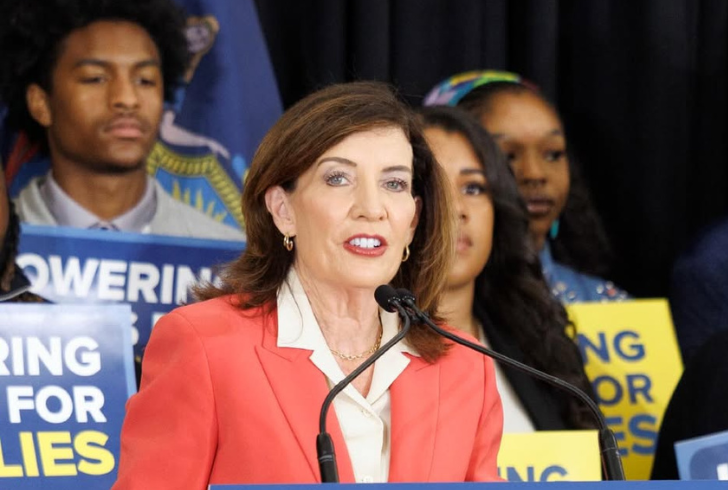
Instagram | @govkathyhochul | Governor Hochul signed the medical aid-in-dying bill, enacting the law this coming August 5.
Among the most visible supporters of New York’s legislation was Jules Netherland, a 59-year-old nonprofit employee from the Bronx.
Netherland traveled repeatedly to Albany to urge lawmakers to support the bill. Activities included attending rallies, visiting legislators’ offices with fellow members of Compassion & Choices, and participating in demonstrations. During a 2024 Assembly debate, supporters displayed a banner reading, “Stop the Suffering.”
The issue became deeply personal after Netherland’s breast cancer diagnosis in 2019.
“I did a full year of aggressive treatment,” Netherland said. “Chemotherapy. A mastectomy. Radiation treatment every weekday for five weeks. Six months of two oral medications.”
After initially recovering, the cancer returned in metastatic form several years later. Although metastatic breast cancer remains incurable, medication has helped control the disease. The treatment, however, has brought ongoing challenges, including fatigue, brain fog, gastrointestinal issues, and joint pain.
“My energy is really limited,” Netherland said.
For years, Netherland worried the legislation might not pass in time.
Public Support Continues to Rise
Survey data suggest that support for medical aid in dying extends across many demographic and political groups.
A Pew Research Center survey conducted in 2024 found that nearly two-thirds of respondents did not view the practice as morally wrong. Many considered it acceptable, while others did not see it as a moral issue at all.
Support crossed party lines. A slim majority of Republicans and 76% of Democrats said physician-assisted death was permissible. Most Catholics, Jewish respondents, and non-evangelical white Protestants expressed similar views.
Public opinion in New York reflected comparable trends. A Siena poll reported that 54% of respondents supported aid in dying legislation. Majorities of men and women, residents from urban and rural areas, and people across age groups backed the measure. Latino respondents generally supported the proposal, while Black respondents narrowly opposed it.
According to bioethicist and law professor Thaddeus Pope of Mitchell Hamline School of Law in St. Paul, Minnesota, the growing number of states with established programs has made passage easier.
“You can say, ‘We have 10 years in California, 18 years in Washington, and 29 years in Oregon, and nothing bad has happened.’ It becomes more accepted,” Pope explained.
Why The Debate Remains Intense
Despite growing support, medical aid in dying remains one of the most debated healthcare issues in America.
Catholic leaders and many disability rights organizations continue to oppose these laws. Pope Leo XIV personally asked Illinois Gov. JB Pritzker not to sign the state’s legislation.
The American Medical Association also maintains its opposition. The organization states that “physician-assisted suicide is fundamentally incompatible with the physician’s role as healer” and warns of “serious societal risks.”
Not every medical organization shares that position. Several state-level groups have adopted neutral stances, while others, including organizations in New York, supported the legislation.
Legal challenges are also ongoing.
The Patients’ Rights Action Fund has pursued lawsuits in California, Delaware, and Colorado. Through a related organization, the group argues that aid in dying laws may discriminate against people with disabilities by encouraging physician-assisted death instead of treatment options.
“This is a litigation strategy we’ve developed to ultimately get to the Supreme Court,” said executive director Matt Vallière.
Who Qualifies for Medical Aid in Dying?
Eligibility requirements remain strict across most jurisdictions.
In every state where medical aid in dying is legal—except Montana, where legality stems from a court ruling—patients must have an incurable illness and a life expectancy of six months or less.
The process generally requires multiple steps, including evaluations by two physicians, written and verbal requests, and mandatory waiting periods.
Patients must also possess the mental capacity to make healthcare decisions. As a result, individuals with advanced dementia generally do not qualify. In addition, patients must take the medication themselves without assistance.
New York’s final legislation includes an additional safeguard requested by Gov. Hochul. The law incorporates evaluation by a psychologist or psychiatrist during the process.
Residency requirements create another hurdle. Most states require applicants to be residents. Oregon and Vermont eliminated those rules after legal challenges brought by Compassion & Choices. Courts, however, rejected a similar case in New Jersey.
Healthcare providers also retain the right to opt out.
“The state can say ‘You need A, B, and C,’ and Columbia-Presbyterian can say, ‘We also want D, E, and F,'” Pope noted.
A Widely Discussed Option Used by Few

Freepik | The debate around medical aid in dying is massive, but actual utilization remains remarkably low.
Although medical aid in dying receives significant attention, relatively few patients ultimately use it.
In states where the practice is legal, those who choose it typically account for 1% or less of annual deaths. The gap between public support and actual participation remains striking.
Several factors may contribute to the low numbers, including strict eligibility rules, procedural requirements, and limited public awareness.
At the same time, many lawmakers have adjusted regulations after evidence showed some patients died before completing the process. California reduced its waiting period from 15 days to 48 hours. New Mexico expanded prescribing authority to include physician assistants and advanced-practice nurses.
“Most states have now amended their laws two or three times,” Pope said. “We have liberalized.”
Telehealth services have also improved access to participating physicians in several states.
Personal Choice at the End of Life
Supporters often frame medical aid in dying as a matter of personal control during advanced illness.
Díaz argues that individuals facing severe suffering should have the authority to decide when treatment no longer aligns with their wishes.
“The person who has to bear the burden of the suffering should have the ability to decide when it’s enough,” he said.
That perspective resonates with Anne Gurnett Bander, a 72-year-old retired research scientist from Carmel, New York.
For four years, Gurnett Bander cared for her husband as ALS, also known as Lou Gehrig’s disease, gradually took away his ability to function independently. By the end of his illness, he was bedridden and dependent on feeding and breathing tubes.
“By the time he died, the only thing he could do was nod his head,” she recalled.
After receiving her own ALS diagnosis in 2024, Gurnett Bander considered traveling to Switzerland, where the nonprofit Dignitas provides medical aid in dying services. When New York’s legislation gained momentum, she became one of its public supporters, continuing to speak out even as the disease affected her speech.
Like Netherland, Gurnett Bander has not decided whether she will eventually use the option. Many patients complete the required steps, obtain the medication, and never take it.
For some, the existence of the choice itself provides comfort.
“It can offer so much peace of mind,” Netherland said. “I thought, ‘People should have this option.’ Now, they will.”
Medical aid in dying laws in New York and Illinois expand end-of-life options in the United States. By September 2025, nearly one-third of Americans will live in jurisdictions where eligible terminally ill patients can legally access this option.
Supporters see the laws as a matter of personal choice, while opponents continue to raise ethical, medical, and legal concerns. As more states consider similar legislation, the debate over medical aid in dying is expected to continue.