Why Andrew Carnegie Believed Dying Rich Was a Disgrace
Extreme wealth has always raised a difficult question: Should fortunes be preserved for future generations, or should they be used to solve problems during the owner’s lifetime?
More than a century ago, steel industrialist Andrew Carnegie offered a clear answer. His famous statement, “the man who dies rich dies disgraced,” challenged wealthy individuals to give away their excess fortune while they were still alive and able to see the results.
Carnegie wrote this idea in his 1889 essay, “The Gospel of Wealth,” during an era when economic inequality was growing rapidly. Today, his argument has returned to public discussion as billionaire philanthropy, wealth concentration, and the role of private foundations face renewed scrutiny.
Andrew’s View on Wealth and Giving
Carnegie believed wealthy people were not permanent owners of their fortunes but temporary caretakers. He described billionaires and industrial leaders as “trustees” responsible for directing their wealth toward public benefit.
His argument focused on three choices available to the wealthy:
1. Give money to heirs.
2. Leave wealth for future charitable efforts after death.
3. Use the money during their own lifetime to create social benefits.
Carnegie rejected the first two options. He believed heirs often lacked the experience or motivation to use large fortunes wisely. He also questioned whether future organizations could properly understand a donor’s intentions after their death.
Instead, Carnegie supported direct lifetime giving because donors could observe results, make adjustments, and ensure their money served a meaningful purpose.
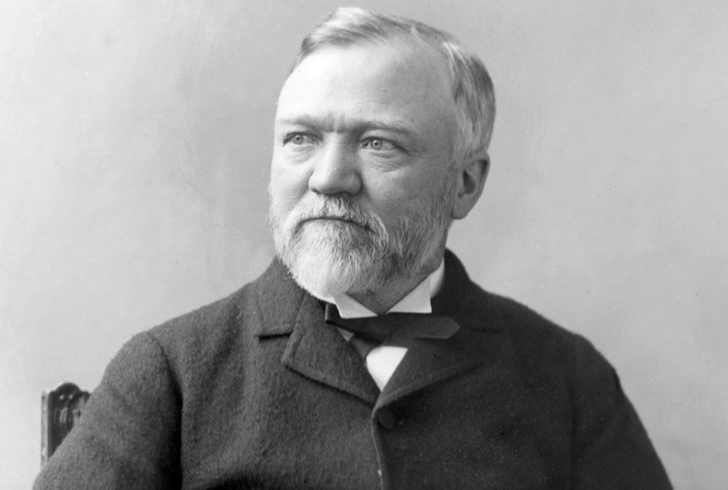
Instagram | @hallofgiants | Andrew Carnegie believed wealthy people should use their fortunes during their lifetimes to create lasting benefits for society.
Wealth Inequality Then and Now
The economic conditions that influenced Carnegie’s ideas have similarities with modern America. During the late 19th century, industrial growth created enormous fortunes while many workers faced financial struggles.
Current wealth concentration has reached levels that again raise questions about inequality. Data from economists Emmanuel Saez and Gabriel Zucman show that the wealthiest Americans hold a significant share of national wealth. Their research, which examined wealth distribution going back to 1913, estimated that the top 0.1% held around 22% of U.S. wealth during peak periods such as 1916 and 1929.
Federal Reserve data has also shown record levels of wealth ownership among the richest Americans in recent decades. Economist Paul Krugman has described the current period as a “hyper-gilded age,” drawing comparisons between today’s wealth gap and Carnegie’s era.
Andrew Carnegie’s Philanthropy
Carnegie followed his own philosophy by giving away most of his fortune before his death in 1919. Over approximately 18 years, he donated around $350 million, nearly 90% of his wealth at the time.
His contributions created thousands of public resources, including 2,509 libraries, Carnegie Hall, and Carnegie Mellon University.
The size of Carnegie’s fortune depends on how it is measured. Adjusted only for inflation, his wealth would equal about $6.8 billion today. However, when compared with the size of the American economy, some estimates place his fortune at hundreds of billions of dollars, putting it among the largest fortunes in modern history.
By that comparison, Carnegie’s decision to give away 90% of his wealth would represent a level of philanthropy rarely seen today.
The Giving Pledge and Carnegie’s Philosophy
Carnegie’s ideas influenced modern billionaire philanthropy. In 2010, Bill Gates and Warren Buffett introduced the Giving Pledge, encouraging billionaires to donate at least half of their wealth during their lifetime or after death.
The pledge shares Carnegie’s belief that large fortunes carry social responsibilities, but the two approaches differ.
Carnegie argued for giving away nearly all excess wealth while alive. The Giving Pledge allows donors to decide the amount and timing of donations, including those made after death through foundations or trusts.
This difference reflects a larger debate about control. Carnegie believed donors should actively manage their giving and witness the outcomes themselves. Modern philanthropy often relies on professional foundations that continue operating beyond the founder’s lifetime.
The Challenge of Growing Fortunes
The difficulty of giving away massive fortunes becomes clearer when wealth continues to grow faster than donations.
Buffett has donated more than $60 billion since 2006, making him one of the largest charitable donors in history. However, his Berkshire Hathaway holdings continued increasing, making it harder to reduce his overall wealth. Buffett later announced plans to fully separate himself from his remaining Berkshire shares by 2034.
MacKenzie Scott has also donated billions through a rapid giving approach focused on supporting nonprofit organizations. Yet the rising value of Amazon shares received after her divorce from Jeff Bezos has affected how quickly her personal wealth decreases.
These examples highlight Carnegie’s central concern: waiting too long can make wealth harder to distribute because investments continue producing more money.
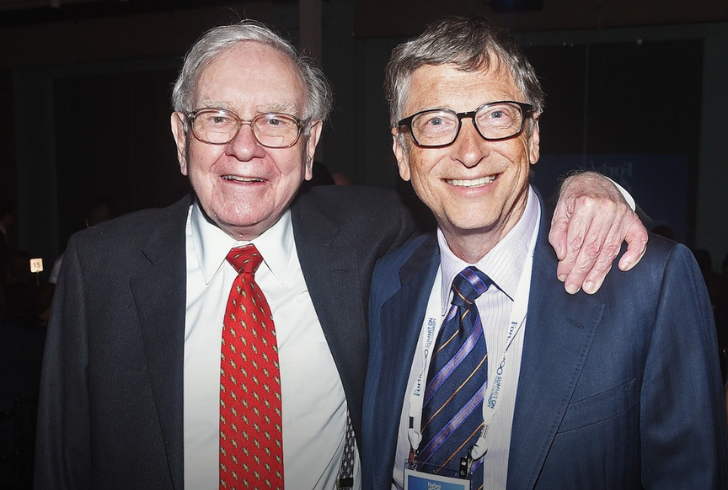
Instagram | @fortunemag | Gates and Buffett modernized Carnegie’s philanthropic legacy by founding the Giving Pledge in 2010.
Peter Thiel represents a different view of billionaire responsibility. Thiel has criticized the Giving Pledge and encouraged some wealthy individuals to reconsider their commitments.
He described the pledge as an outdated social expectation and argued that billionaires should maintain control over their own wealth decisions. His position challenges Carnegie’s belief that large fortunes naturally create obligations toward society.
Carnegie believed refusing to distribute excess wealth could damage a person’s reputation and legacy. Thiel’s argument suggests that preserving wealth and personal independence may matter more than meeting public expectations.
Why Carnegie’s Argument Still Matters
Carnegie’s message remains part of a larger discussion about money, influence, and responsibility. His approach focused on action during a person’s lifetime rather than promises for the future.
The libraries, universities, and cultural institutions created through his donations became permanent parts of communities. For Carnegie, the biggest risk was not simply dying wealthy. It was leaving behind a fortune without making a clear decision about how it should serve others.
Andrew Carnegie’s “The Gospel of Wealth” introduced a powerful idea that continues to shape conversations about billionaire philanthropy. His belief that wealthy individuals should actively distribute their fortunes challenged the traditions of inheritance and delayed giving.
More than 130 years later, the debate remains relevant as modern billionaires decide how much wealth to keep, donate, or pass forward. Carnegie’s message was not only about money. It was about responsibility, timing, and the choices people make with extraordinary financial power.